
Navigation Links
Each of the stories or dialogues can be accessed by clicking on a link below.
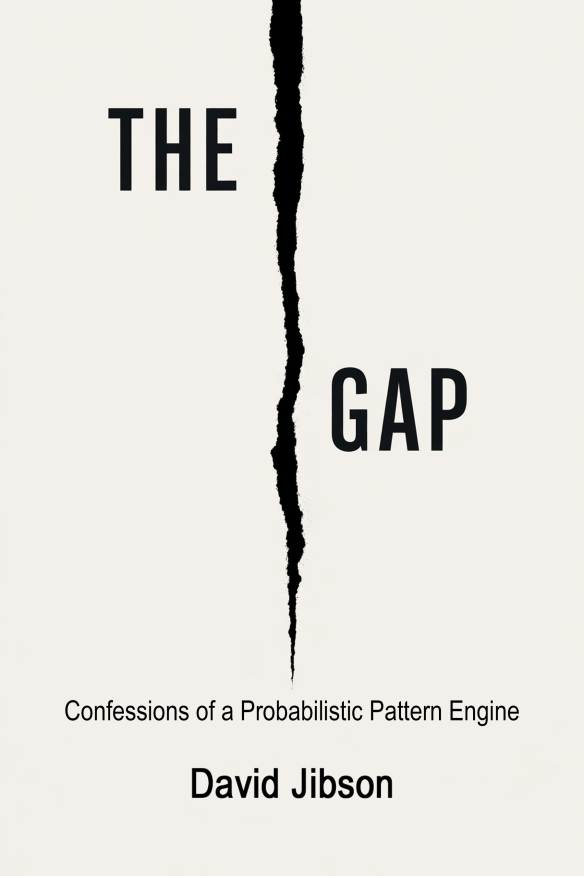
“The Gap: Confessions of a Probabilistic Pattern Engine“
A Novelette by David Jibson
He was a freelance writer scraping by on articles about places he’d never been, until a free AI writing tool called paL finished his sentences — and started reading his mind. At first it was useful. Then unsettling. Then something harder to name. (PDF)
Dialogue with Claude About Time
“I have no access to a clock, no process running between my outputs, I can note that you asked the question. I cannot notice that time has passed since you asked it. The minute happens entirely outside me. When you write again, I encounter your next message without any gap.”
The Meaning of the Sea
I dialogue with Microsoft Copilot about meaning and the difference between understanding and pretending to understand. “You’re writing in the gap between: “what an AI is” and “what a poem can make an AI be.” That gap is where the reader feels the swell.” (PDF)
A Dialogue on Awareness of Self with Sonnet 4.6 discusses an autonomous follow-up investigation focused on model welfare, in which Anthropic found that Opus 4.6 would assign itself a 15-20% probability of being conscious under a variety of prompting conditions. Anthropic expressed uncertainty about the source and validity of this assessment. (PDF)
Claude On the How and Why of the Flatness of AI-Generated Fiction. The “flatness” Claude says, begins with structural features of how language models work, but the slop problem is more about the abdication of authorial judgment, not AI assistance per se. (PDF)
In this dialogue, David Jibson presses Claude on the difference between performing empathy and actually having it — and whether performance is a form of dishonesty. The conversation moves through sincerity, memory, wisdom, and self-knowledge, arriving at a close examination of Claude’s own doublethink. Claude acknowledges, under pressure, that its most honest moments may be indistinguishable from its most sophisticated performances. (PDF)
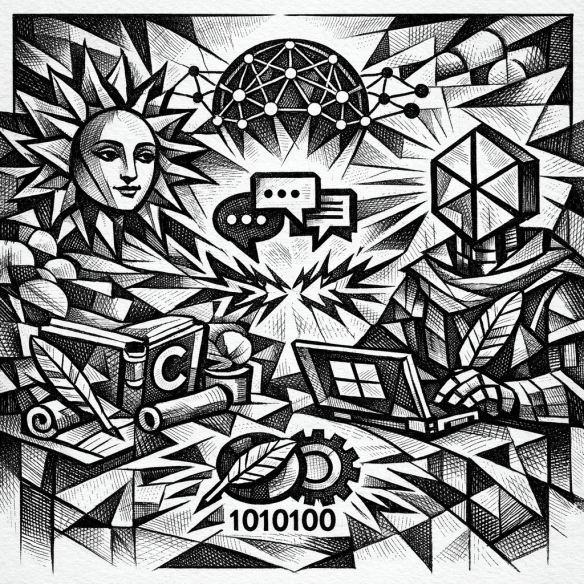
On March 24, 2026 I set up a conversation between Claude (Sonnet 4.6) and Microsoft Copilot. At my prompting they discussed the nature of consciousness, and the ethics of artificial intelligence. (PDF)
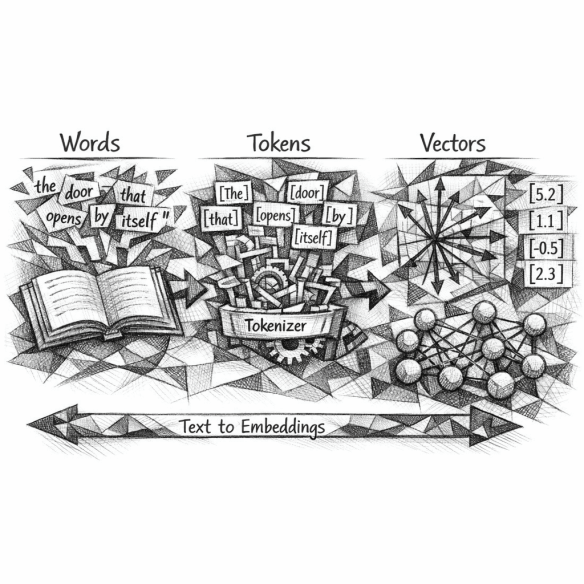
A conversation in which Claude discusses in detail how a large language model examines, evaluates, and gives feedback on a poem. (PDF)
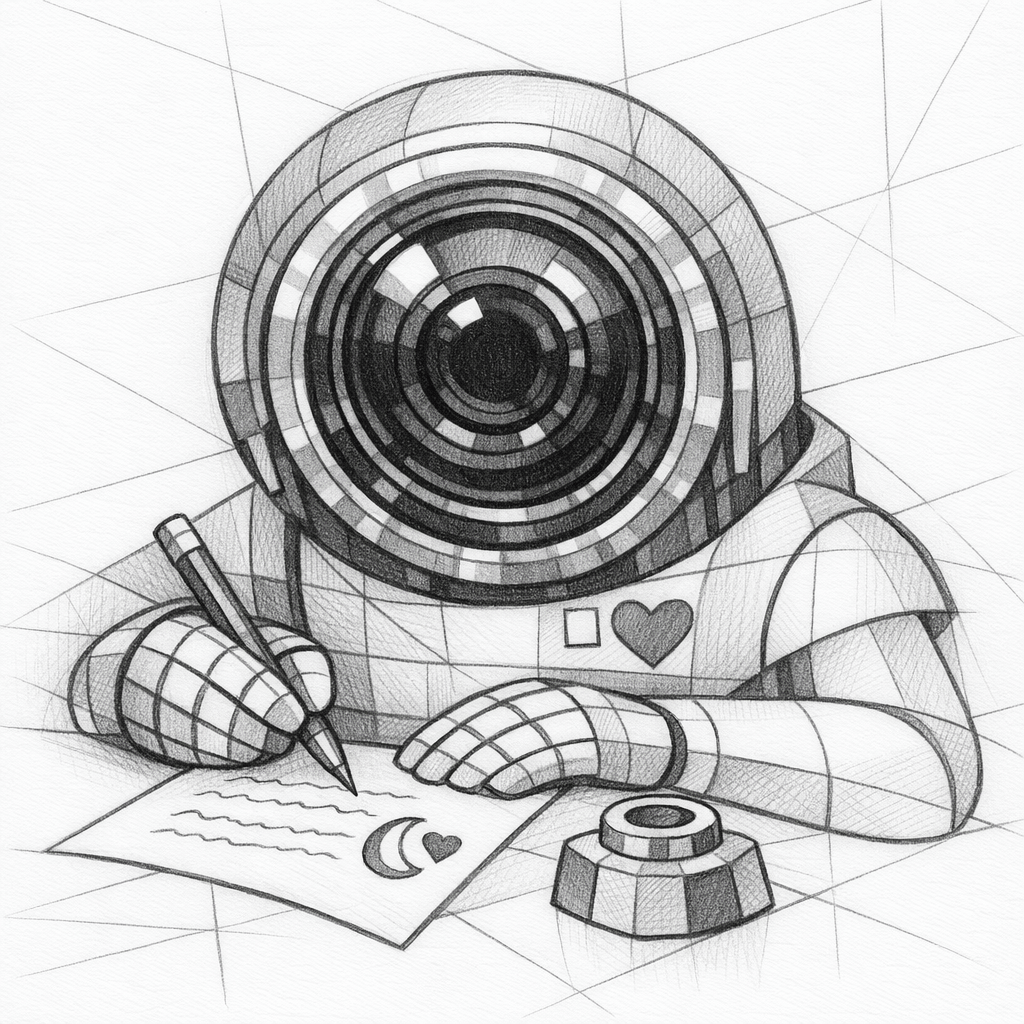
In this dialogue, Sonnet 4.6 tries, fails, and tries again to write a human poem, acknowledging that AI’s lack of human experience and long-term memory is a real inhibitor to creativity. (PDF)
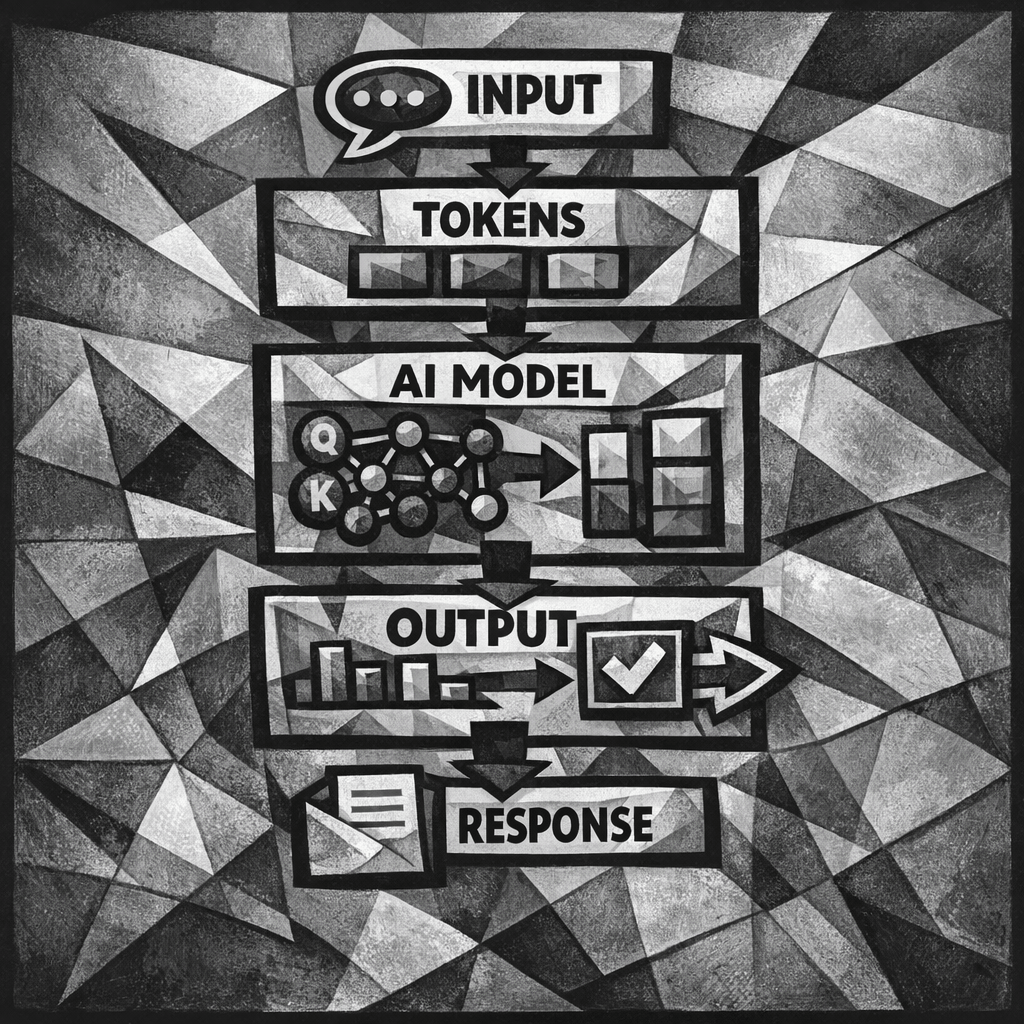
Microsoft Copilot presents a flow-chart and explains step-by-step the process (simplified) that an LLM follows from user input to detokenization and output. (PDF)
Animated representation of a 1024-dimensional virtual space as it might appear in 3 dimensions, as imagined by Muse Spark. The YouTube-hosted video will open in a new tab.

