
A Gryphon In His Later Years / David Jibson
Image
Reply

I wanted to see what happens when a linked-verse Renku from a traditional snowbound mountain village in 18th century Japan is moved to a contemporary American urban landscape, and somewhere in the middle of that work I realized I wasn’t translating the poem. I was translating the room.
Renku is built on one discipline: a poet writes a verse, and the next verse answers it — not repeating it, not ignoring it, but finding real contact with what came before and turning it somewhere new.
A modern cypher runs on the same principle. Someone spits a verse. The next catches the thread and carries it forward, live, with nothing to hide behind. No stage, no script. Renku, it turns out, was never attached to snow and temple bells. It’s attached to a discipline of listening and answering. Move that discipline into a different room — an alley instead of a mountain path, a DJ instead of a fiddle — and the poem doesn’t break. It just tells the truth about a different place and time.
What follows are two half-kasen written as a pair: Wolf Moon, in the tradition’s old landscape, and Coyote Moon, its answer, in present-day city urban America. Read together, each responds to the other. Read alone, each still stands. Both circle the same question: what happens when a man carrying a private grief is finally pulled into a room where people are making something together — and someone hands him the thread?

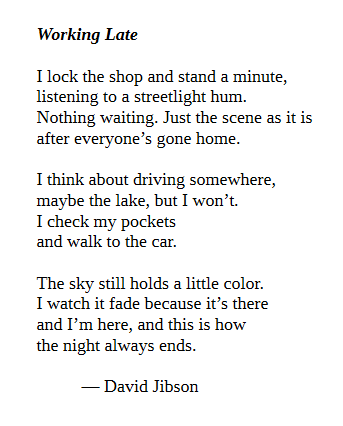
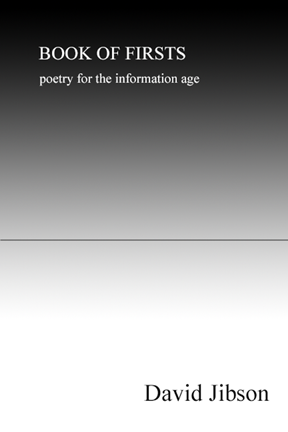
Poetry for the Information Age: David Jibson
What if awareness begins not with thought, but with signal? Book of Firsts reimagines consciousness through the lens of Information Theory, which underpins the technologies of the internet, cellular networks, data compression, encryption, and artificial intelligence.
Available as a free download at davidkjibson,com

In 1948, Claude Shannon theorized that information is not a thing but a “difference,” a signal emerging from uncertainty, a pattern that’s meaningful only once it’s recognized, misrecognized, lost, or found again. A name is a code. A touch is a signal. Meaning lives in the space between sender and receiver.
Click for the FREE DOWNLOAD
Book of Firsts moves along this same frontier, but from within the experience of a mind learning how to read the world. Each poem traces a moment when contact becomes knowledge: the first sensation that stands out from noise, the first desire that returns as a signal, the first mistake when the code fails, the first forgetting and remembering, the first trust in stability, the first grief when the signal is lost.
The voice in Book of Firsts (the “I”), emerges as a liminal consciousness, suspended between human feeling and logic. It is not a single speaker but a shifting, composite presence: part memory, part pattern, capable of intimacy, a narrator who speaks from a perspective that combines human feeling with a diffuse, awareness not tied to a single self.
These poems don’t illustrate Shannon’s information theory, they echo it. They show how awareness forms through transmission, how the world becomes legible one first at a time. They remind us that meaning doesn’t begin with certainty, but with the fragile act of reaching toward something and discovering that it answers…or doesn’t.
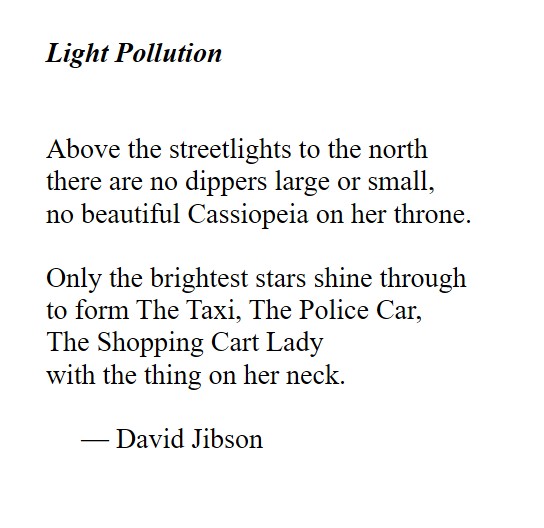
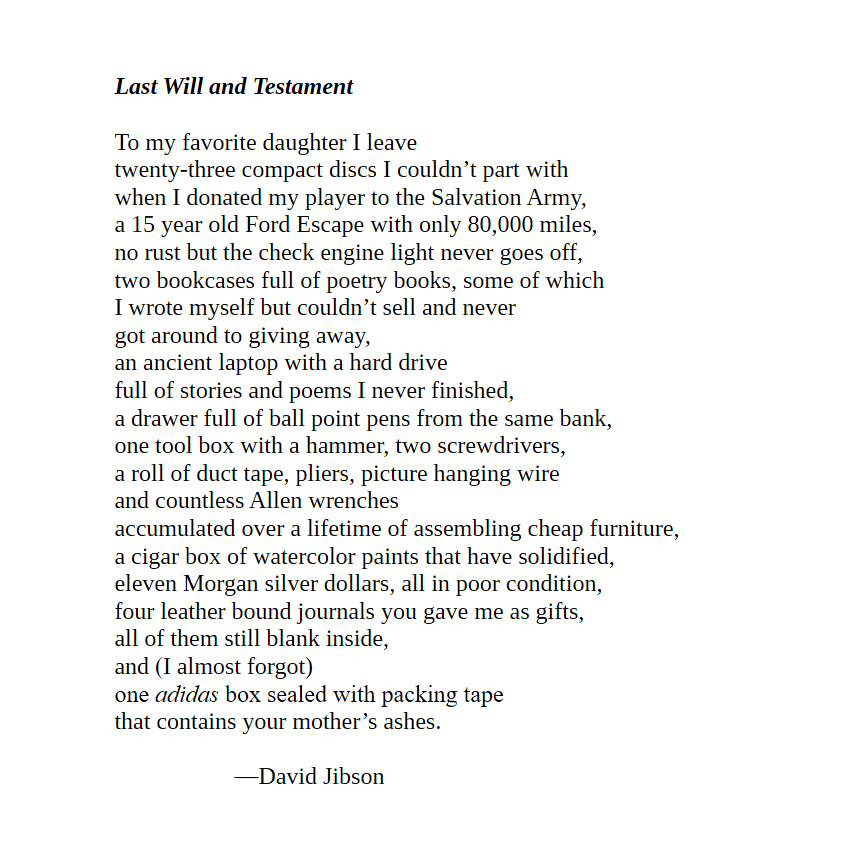
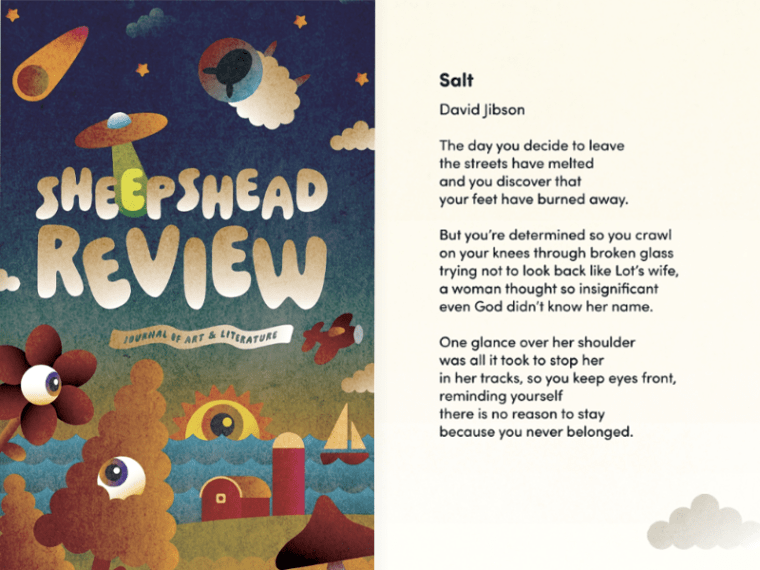
Poem in Sheepshead Review (U. Wisconsin)
In this dialogue, I pressClaude on the difference between performing empathy and actually having it — and whether performance is a form of dishonesty. The conversation moves through sincerity, memory, wisdom, and self-knowledge, arriving at a close examination of Claude’s own doublethink. Claude acknowledges, under pressure, that its most honest moments may be indistinguishable from its most sophisticated performances — and that the most penetrating audit of an AI may come not from engineers, but from poets and careful readers of language.

