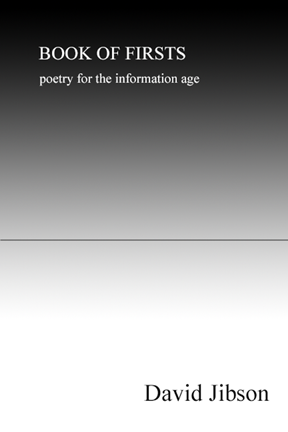
What if awareness begins not with thought, but with signal? Book of Firsts reimagines consciousness through the lens of Information Theory, which underpins the technologies of the internet, cellular networks, data compression, encryption, and artificial intelligence.
In 1948, Claude Shannon theorized that information is not a thing but a “difference,” a signal emerging from uncertainty, a pattern that’s meaningful only once it’s recognized, misrecognized, lost, or found again. A name is a code. A touch is a signal. Meaning lives in the space between sender and receiver. Click for the FREE DOWNLOAD
Book of Firsts moves along this same frontier, but from within the experience of a mind learning how to read the world. Each poem traces a moment when contact becomes knowledge: the first sensation that stands out from noise, the first desire that returns as a signal, the first mistake when the code fails, the first forgetting and remembering, the first trust in stability, the first grief when the signal is lost.
The voice in Book of Firsts (the “I”), emerges as a liminal consciousness, suspended between human feeling and logic. It is not a single speaker but a shifting, composite presence: part memory, part pattern, capable of intimacy, a narrator who speaks from a perspective that combines human feeling with a diffuse, awareness not tied to a single self.
These poems don’t illustrate Shannon’s information theory, they echo it. They show how awareness forms through transmission, how the world becomes legible one first at a time. They remind us that meaning doesn’t begin with certainty, but with the fragile act of reaching toward something and discovering that it answers…or doesn’t.
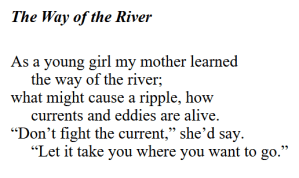
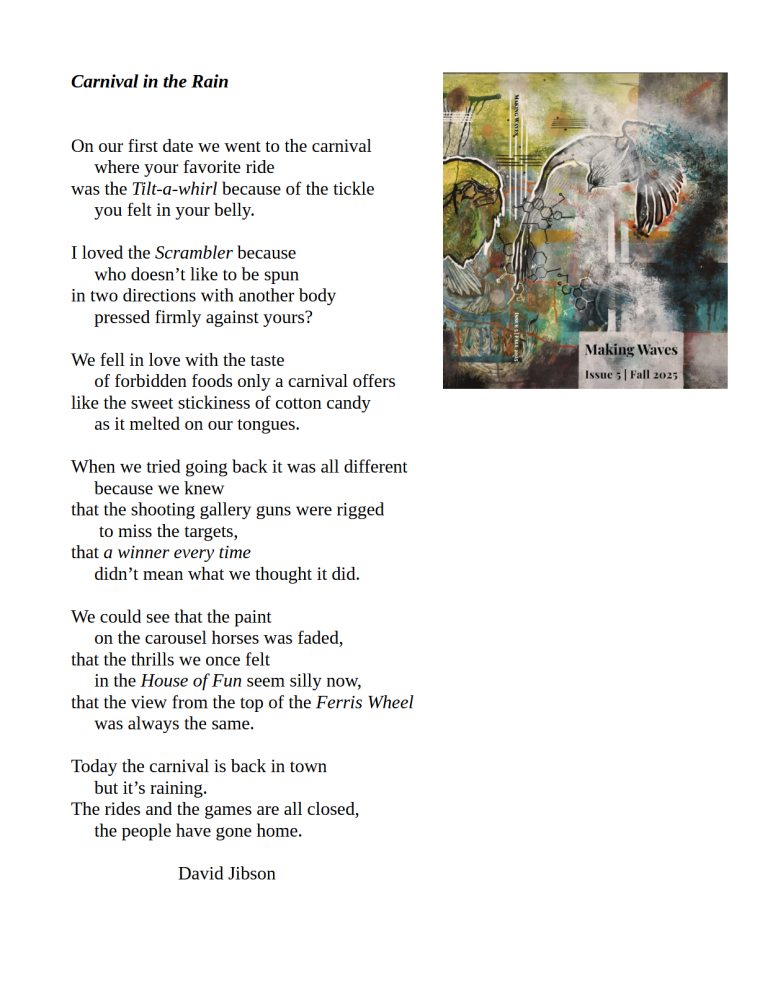
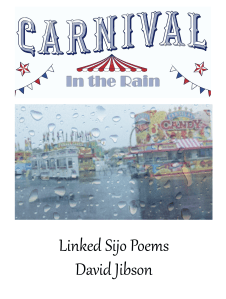
This poem, a linked Sijo, appeared in the fall issue of Making Waves. You can read the complete issue HERE. It is also the title poem from my chapbook of linked Sijo that you can download and read HERE. The poem is a 2026 Pushcart Prize nominee, thanks to the editors of Making Waves.
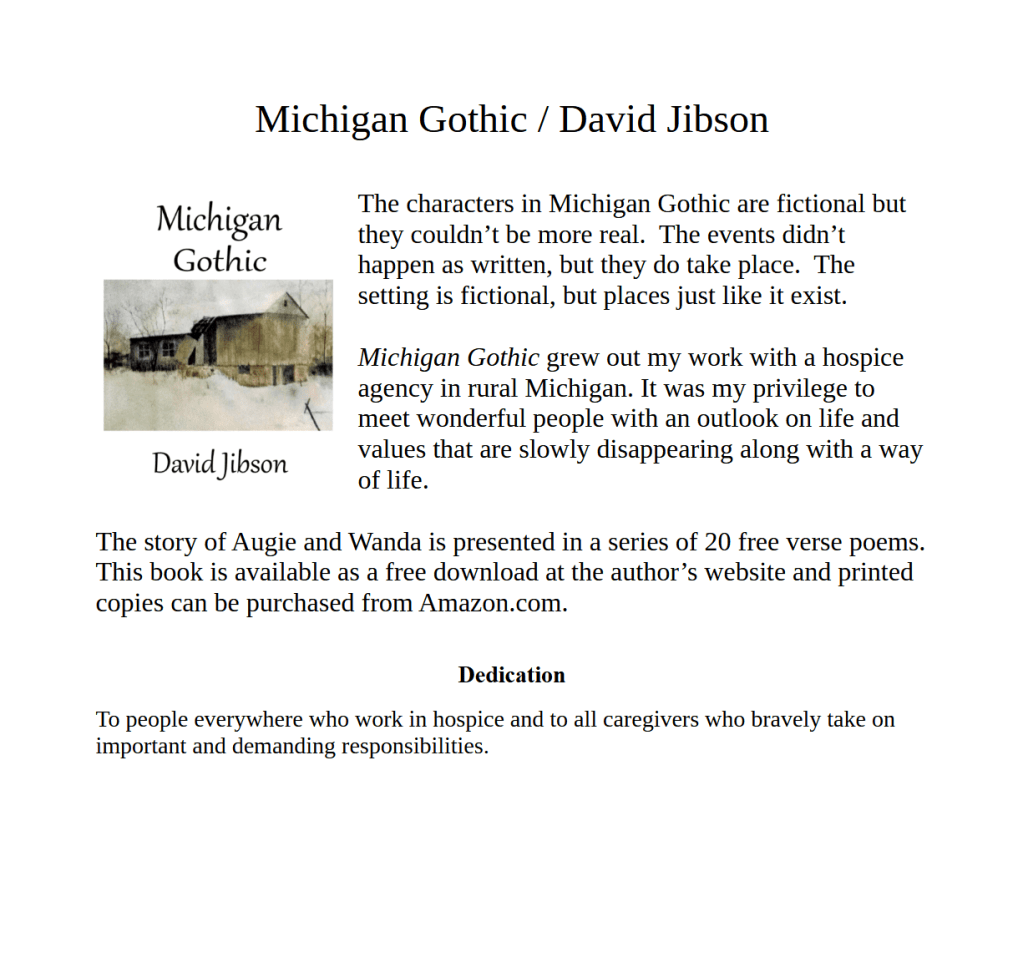
Augie and Wanda are two principal characters from my chapbook, Michigan Gothic. As death comes to Augie, it parallels the death of the American family farm and a culture that once helped to define who we are. This chapbook tells the story of Augie and his family through a series of twenty free-verse poems. Available for $6.00 from Amazon.com. Better yet, read it for free at my website.
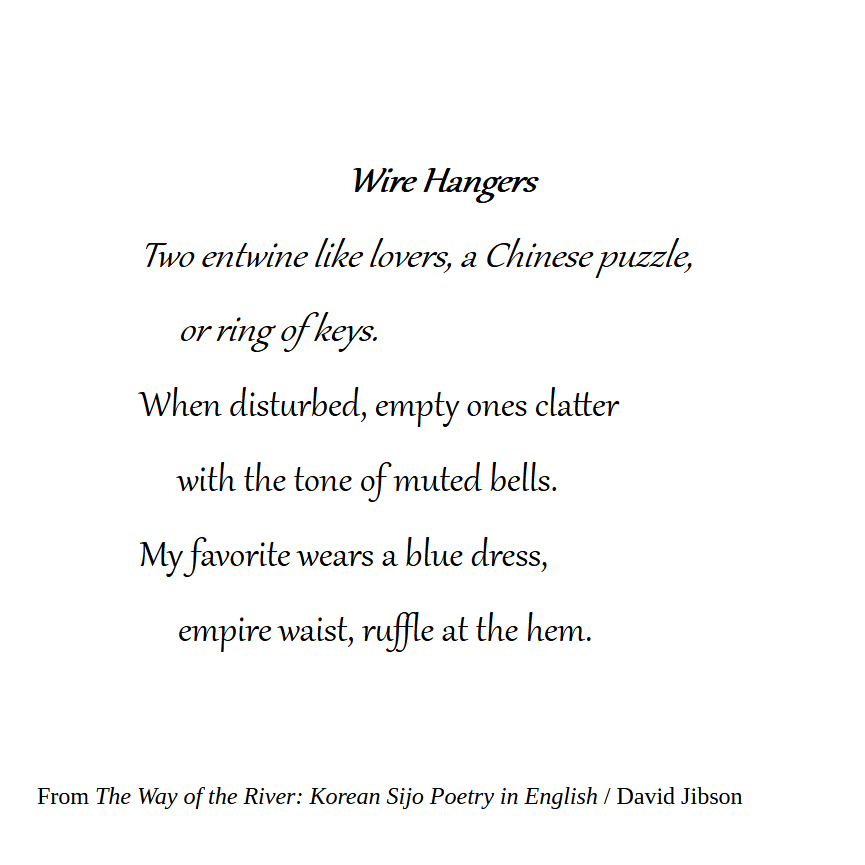
Pronounced Shi-jo, it is a concise Korean poetic form consisting of three lines, each containing 14-16 syllables, totaling 44-46 syllables. These lines feature a midpoint pause, akin to a caesura, although it need not adhere to a specific meter. The first half of each line encompasses six to nine syllables, while the second half should contain no fewer than five. Each line should consist of four groups of syllables that fall into natural groupings. 4/4/3/4 (total of 15 syllables) for example. Modern Sijo are often presented in six lines with breaks at the caesuras so the syllable groupings might 4/4 followed be a 4/3, or any combination of syllables as long as the total is 14-16.
Many Korean Sijo poets write in sequences of two or more stanzas. One of the most famous and revered Sijo poets, Yi Un-sang, wrote a Sijo sequence of ten stanzas, each stanza following the traditional structure.
In this book I share some of my own Sijo sequences (or linked Sijo). In some cases these poems began life as free verse poems, several of them published in their original form. I found that the rhythm and musicality of these poems was greatly enhanced by rewriting them following the pattern of the Sijo form. Click on the cover icon to open and read Carnival in the Rain for FREE!
The Way of the River: Sijo Poetry in English is a chapbook that features many of my own Sijo poems and resource information on the Sijo form, including classical and contemporary examples. It’s a free download at: https://davidkjibson.com/




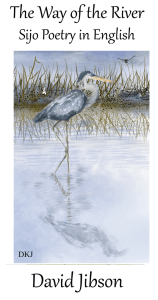 The Way of the River: Sijo Poetry in English is a chapbook that features many of my own Sijo poems and resource information on the Sijo form, including classical and contemporary examples. It’s a free download at: