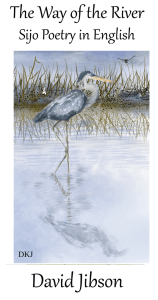
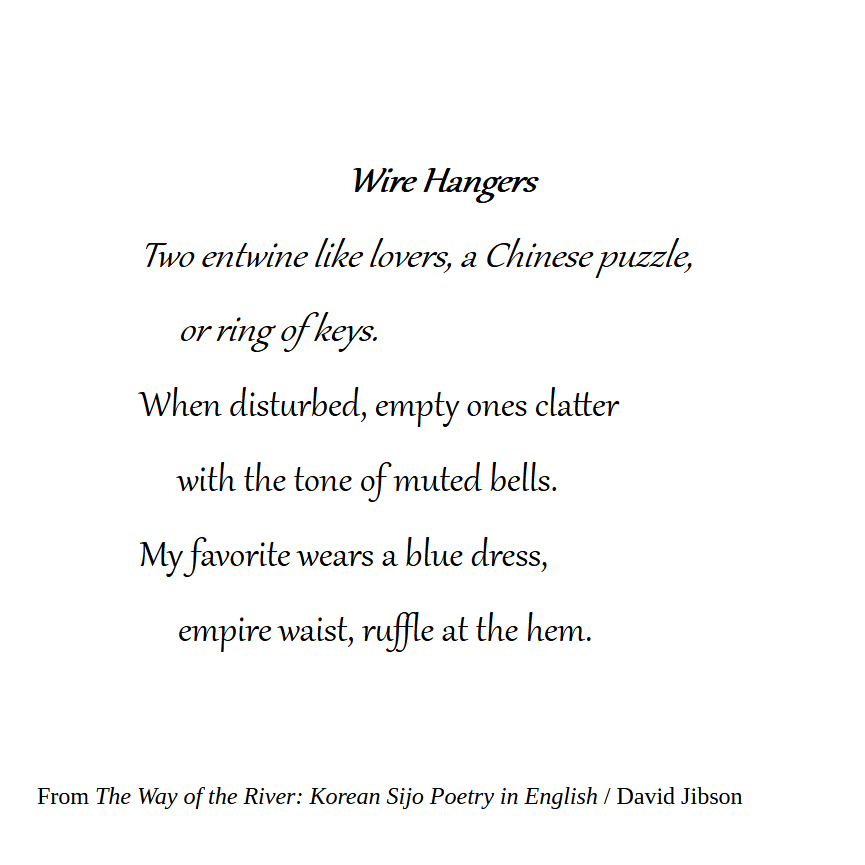
 The Way of the River: Sijo Poetry in English is a chapbook that features many of my own Sijo poems and resource information on the Sijo form, including classical and contemporary examples. It’s a free download at: https://davidkjibson.com/
”
The Way of the River: Sijo Poetry in English is a chapbook that features many of my own Sijo poems and resource information on the Sijo form, including classical and contemporary examples. It’s a free download at: https://davidkjibson.com/
”
Twelve Korean Sijo poems in English with text. Read by the author.
A 10 minute video about the Korean short form.
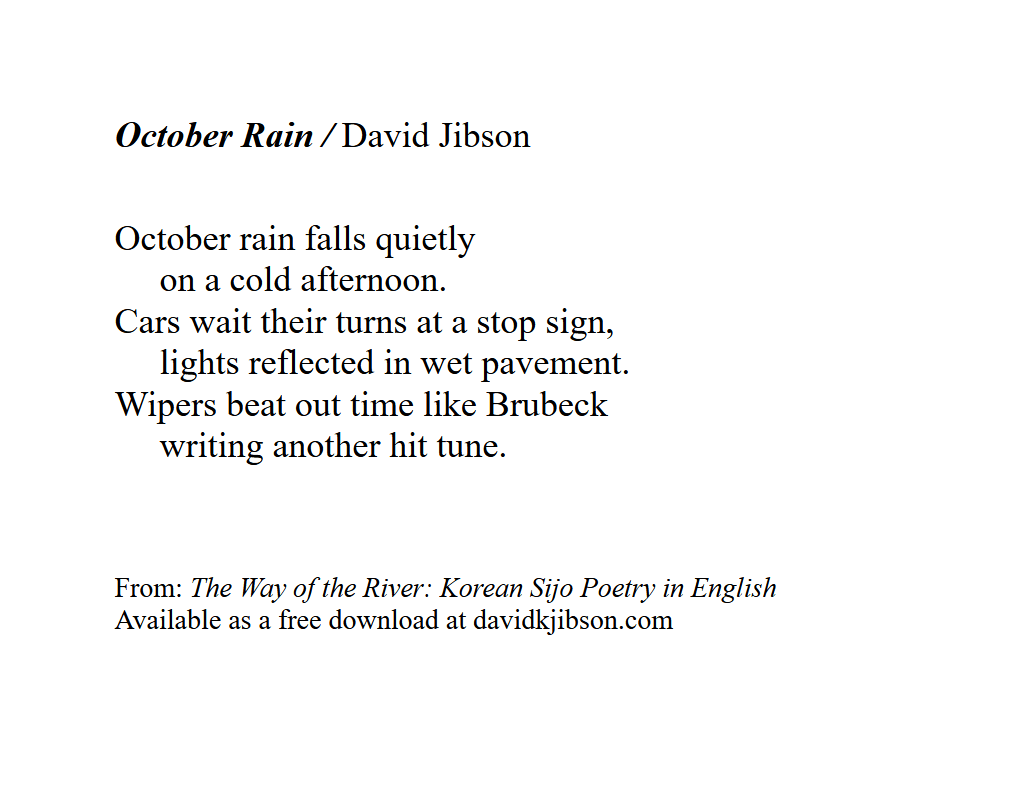
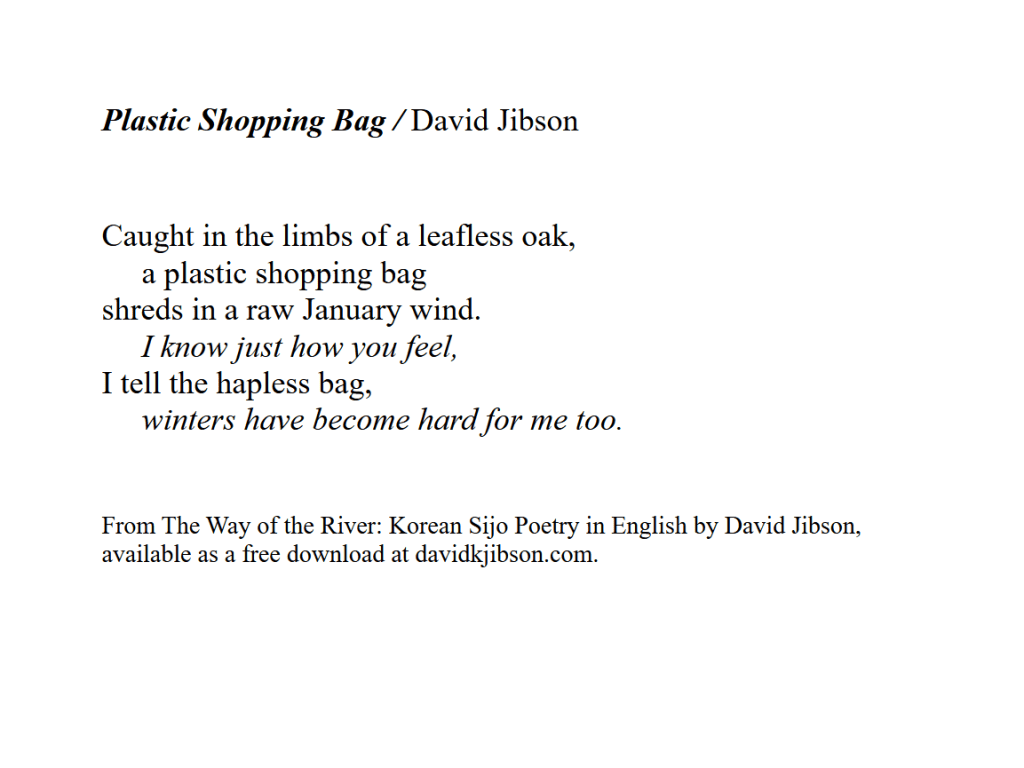
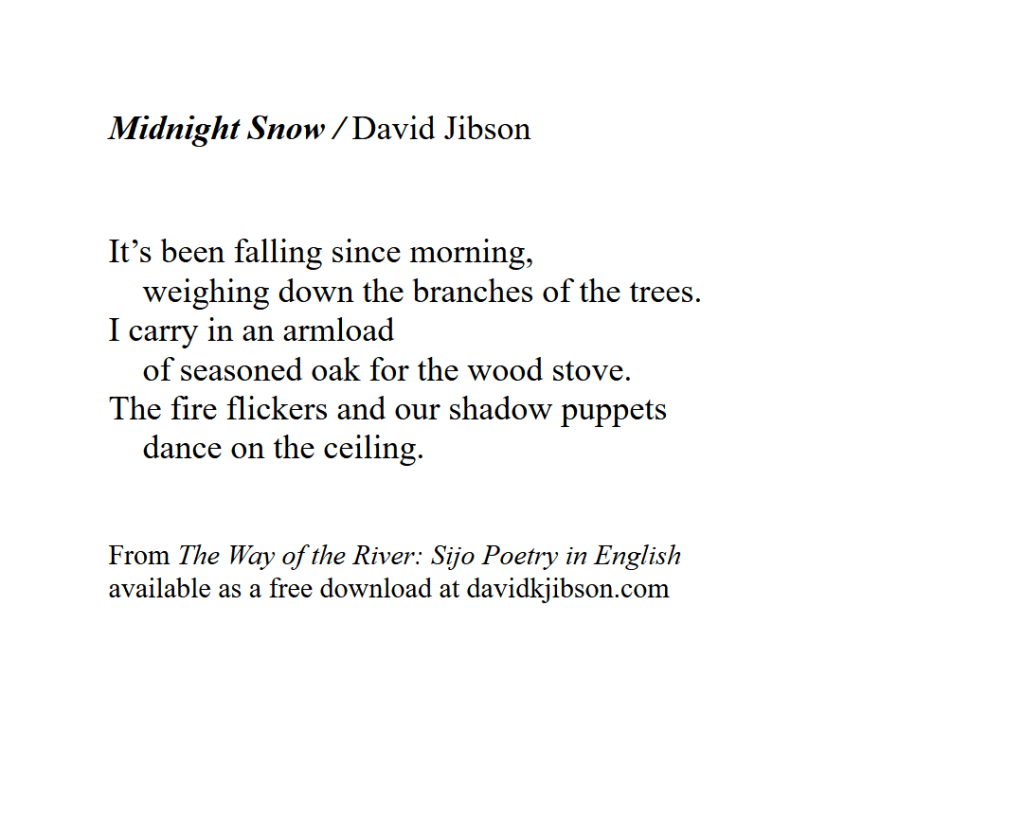
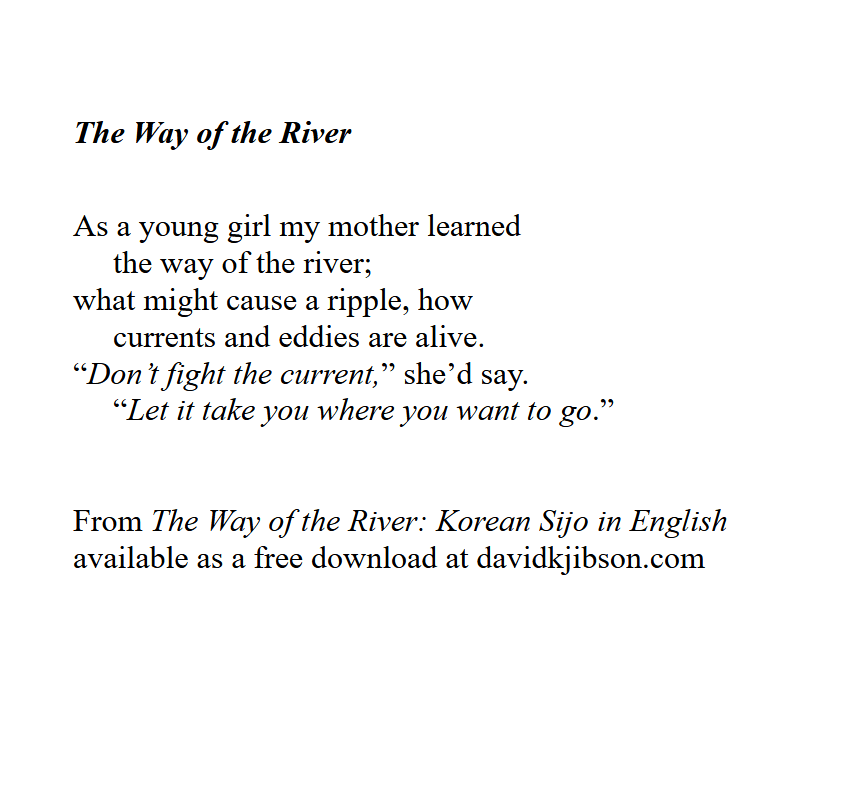
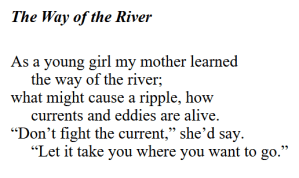
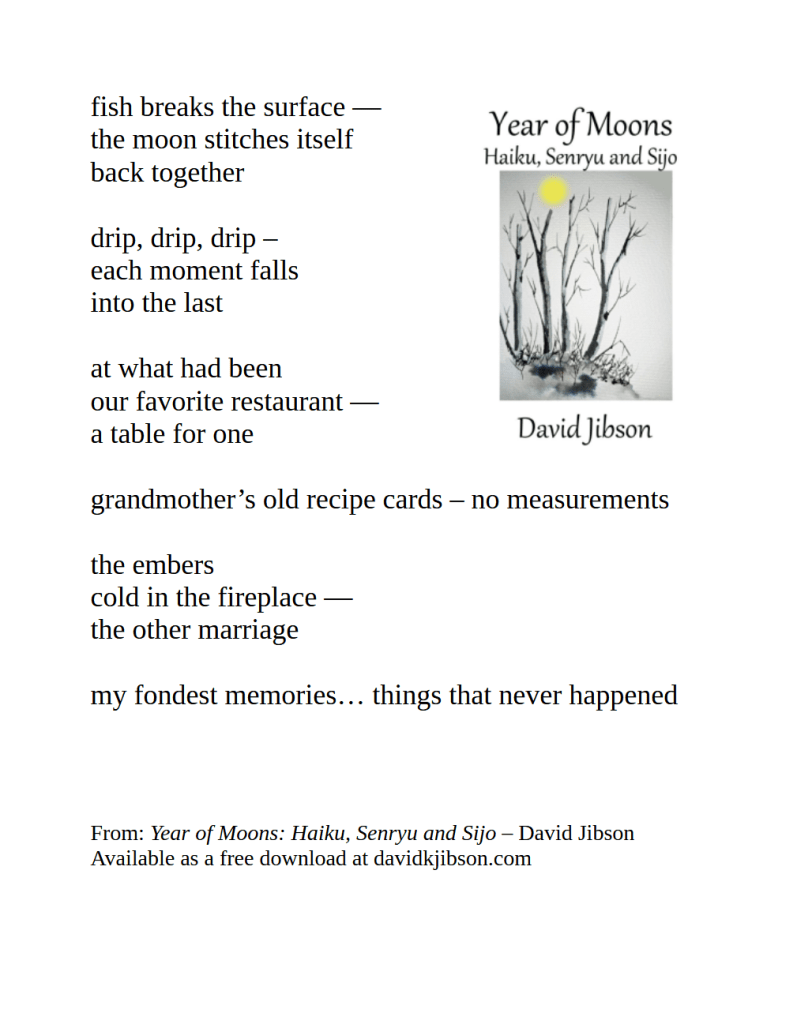
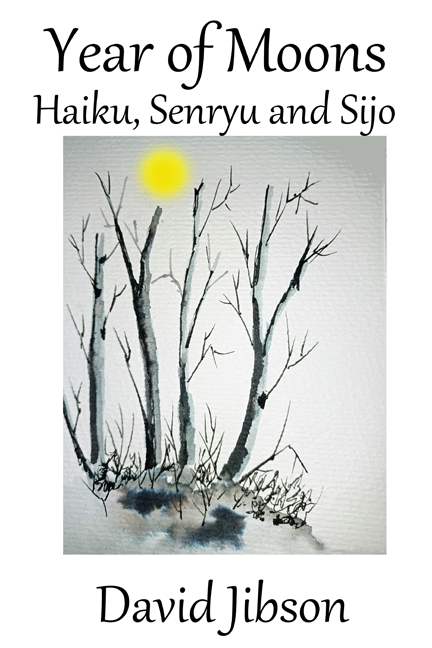 Year of Moons is precious to me. These poems do what I look for; the poem says one thing but means something else. Case in point, my favorite in the collection is a haiku in which the fish breaks the surface. And my 2nd favorite, Way of the River with its ripples of radiating meanings. “Make it [the river] take you where you want to go.” I like the sensual nape of the neck poem, and the way Mr. Jibson makes a poem out of something we’re all familiar with (but don’t write about) like grandmother’s old recipe cards. Of the moon poems, travel moon takes the reader well outside its frame, a great quality in a poem. The same for the Milky Way poem. The thought and research that went into the making of Year of Moons are two of its great qualities, along with the sensitive observations throughout and depth and clarity the writer brought to the project.
– Laurence W. Thomas, Editor Emeritus
3rd Wednesday Magazine
Year of Moons by David Jibson is available as a free download at https://davidkjibson.com/
and is available in print at Amazon.com.
 David K. Jibson